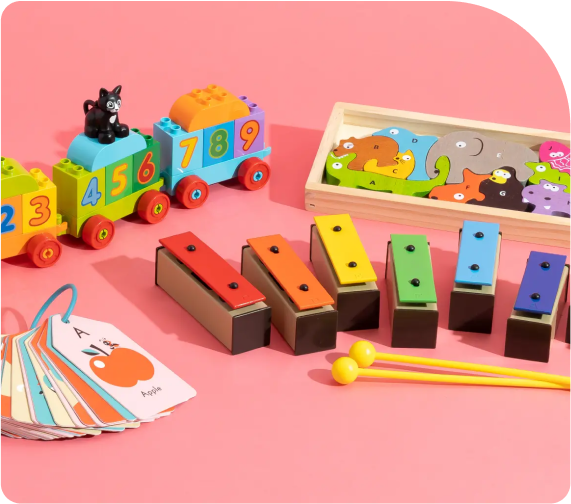
In today's digital world, screens have become a regular part of children's lives. From watching cartoons and playing mobile games to browsing videos, children can easily spend hours in front of a screen. While technology can be useful, children also need time to play, explore, create, and learn without screens.
This is where meaningful play comes in.
Playtime is not just about keeping children busy. The right activities and toys can help children develop creativity, problem-solving skills, imagination, coordination, and confidence.
Why Do Kids Love Screen Time?
Bright colours, sounds, animations, and instant entertainment naturally attract children. Videos and games also provide quick stimulation, which can make traditional activities seem less exciting.
However, children also need opportunities to slow down and interact with the real world.
Instead of completely removing screens, parents can create a healthy balance by introducing engaging screen-free activities.
Why Is Screen-Free Play Important?
Screen-free play gives children the opportunity to use their hands, imagination, and thinking skills.
When a child builds something, solves a puzzle, creates a model, or plays a physical game, they are actively participating instead of simply watching.
Screen-free play can encourage:
- Creativity and imagination
- Problem-solving skills
- Fine motor skills
- Hand-eye coordination
- Logical thinking
- Communication and social skills
- Patience and concentration
- Independent thinking
10 Screen-Free Activities for Kids
1. Building and Construction Activities
Give children building blocks, nuts-and-bolts toys, or construction sets and let them create their own designs.
There is no single correct answer, which encourages children to experiment and think creatively.
2. Solve Puzzles Together
Puzzles are a simple way to encourage logical thinking. Start with age-appropriate puzzles and gradually introduce more challenging ones.
3. DIY Craft Activities
Paper, cardboard, colours, clay, and other safe craft materials can become exciting tools for creativity.
Let children make something of their own instead of following every step perfectly.
4. Indoor Treasure Hunt
Hide small objects around the house and create simple clues. This activity combines movement, observation, and problem-solving.
5. Build a Model
Model-building activities can make children feel like little engineers. They can follow instructions or create something completely different.
6. Board Games
Age-appropriate board games can teach children about taking turns, following rules, decision-making, and patience.
7. Storytelling
Ask your child to create a story around a toy or character. This can help develop imagination and communication skills.
8. Drawing and Colouring
Give children paper and colours and allow them to draw whatever they imagine.
9. Pretend Play
Pretend play allows children to explore different roles and situations while developing creativity and communication.
10. Family Playtime
Sometimes the best activity is simply playing together. Parents can join children in building, puzzles, games, or creative activities.
Choosing the Right Screen-Free Toys
A good toy doesn't need to be complicated. Look for toys that encourage children to do something.
Educational toys, STEM toys, construction sets, puzzles, creative activity kits, and interactive games can turn ordinary playtime into an opportunity to learn.
The goal isn't to make every minute educational. Children should have fun too. When learning happens naturally through play, children are more likely to stay interested.
Create a Healthy Play Routine
Parents can create simple daily routines that include both screen time and screen-free activities.
For example:
After school → Snack → Creative play → Outdoor/physical activity → Limited screen time → Family time
The exact routine can vary from child to child. The important thing is giving children regular opportunities to play without screens.
Final Thoughts
Screens are a part of modern life, but childhood should also include building, creating, exploring, imagining, and playing.
The right screen-free activities can help children discover that learning doesn't always happen through a screen.
Sometimes, all a child needs is a toy, a little imagination, and the freedom to create something new.
Let them play. Let them explore. Let them create.